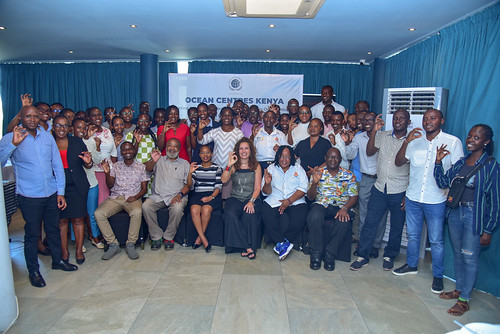
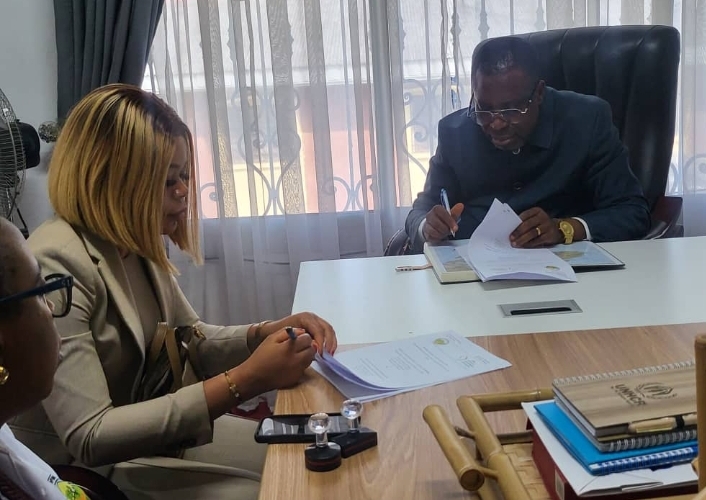
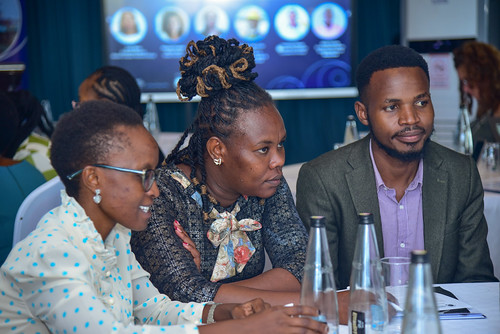
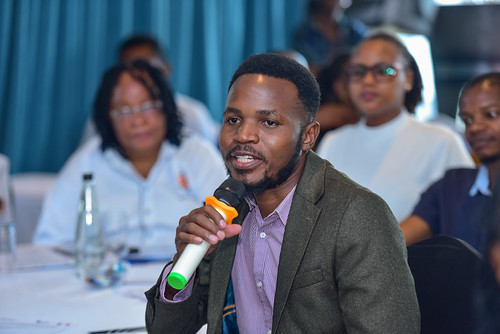
Africa Climate and Environment Foundation (ACEF) recently had the privilege of participating in the Safe Livelihoods in Fishing and Aquaculture Workshop organized by Ocean Centres Kenya and hosted by Global Compact Network Kenya in Mombasa. The workshop brought together regulators, researchers, conservation practitioners, and community leaders, all united by a shared commitment to improving safety, dignity, and sustainability within coastal livelihoods.
The gathering created an important space for dialogue on the realities faced by fisherfolk and aquaculture practitioners, particularly those working within small-scale fisheries. Participants shared experiences, research findings, and practical perspectives on how occupational safety and health can be strengthened across the fisheries value chain. For organizations like ACEF that work closely with coastal communities, these conversations are critical in shaping inclusive and practical solutions.
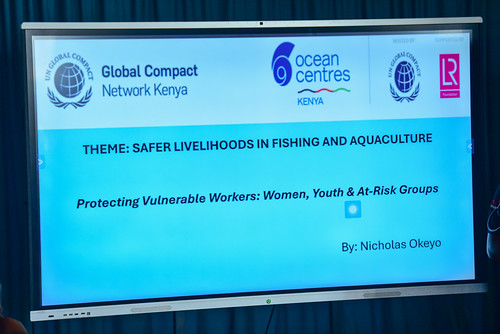
One of the key issues highlighted during the discussions was the level of risk associated with fishing activities. Across the Western Indian Ocean region, small-scale fisheries remain the backbone of coastal livelihoods. However, they also rank among the most hazardous occupations globally. Many fishers operate under challenging conditions with limited access to safety equipment such as life jackets, navigation tools, and communication devices. In many cases, these essential items are either unavailable or too costly for local fisherfolk to obtain.
Without these protective measures, fishers face serious dangers at sea. Sudden weather changes, rough waters, and long hours of physically demanding work increase the likelihood of accidents. Boat-related incidents, drowning, and equipment failures are among the most common causes of injuries and fatalities in fishing communities worldwide. These risks are often amplified for small-scale fishers who rely on traditional boats and gear while operating far from formal emergency response systems.
Beyond fatalities, the daily working conditions of fisherfolk also expose them to numerous occupational health challenges. Injuries from fishing gear, fish spines, and sharp equipment are common occurrences. Many fishers experience cuts, puncture wounds, and infections that can worsen when medical care is not easily accessible. Long hours at sea, repetitive lifting of heavy nets and traps, and constant exposure to sun and saltwater also lead to chronic health problems such as back strain, joint pain, skin conditions, and eye irritation.
Participants at the workshop noted that these occupational risks are not isolated problems. Instead, they are closely connected to broader environmental and economic pressures affecting fisheries throughout the region. Declining fish stocks, ecosystem degradation, and climate variability are increasingly forcing fishers to travel further offshore in search of viable catches. This shift increases operational costs and exposes fishers to more dangerous sea conditions.
Illegal, unreported, and unregulated fishing is another major concern affecting coastal communities. When large-scale or illegal fishing activities reduce available fish stocks near shore, small-scale fishers are pushed to work harder and travel longer distances to sustain their livelihoods. This not only increases safety risks but also threatens the economic stability of families that depend on fishing as their primary source of income.
The workshop also highlighted that these challenges affect the entire fisheries and aquaculture value chain. From harvesting and landing to processing and trade, occupational safety concerns are present at multiple levels. Women, youth, and persons with disabilities who participate in fish processing, trading, or gleaning activities often face additional barriers, including limited access to safety equipment, training, and financial resources.
For many coastal women, fisheries-related work provides an essential pathway to economic independence. Yet these roles often take place in informal settings where occupational safety guidelines are rarely applied. Exposure to smoke during fish processing, heavy lifting during transport, and long hours in harsh environmental conditions can create significant health risks. Ensuring that safety and health protections reach these groups is therefore an important part of building more equitable fisheries systems.
Discussions at the workshop strongly emphasized the importance of strengthening Occupational Safety and Health (OSH) frameworks across the fisheries sector. International standards developed by the International Labour Organization provide valuable guidance for protecting workers and improving safety conditions. However, participants agreed that translating these standards into real-world practice requires more than policy alignment alone.
Effective implementation requires awareness among fisherfolk, access to affordable safety equipment, and stronger coordination between government agencies, community organizations, and the private sector. Training programs, safety awareness campaigns, and improved governance structures can play a key role in ensuring that fisherfolk understand both the risks they face and the tools available to reduce them.
Community-centered approaches were also highlighted as essential. Fisherfolk possess deep knowledge of the sea, weather patterns, and local ecosystems. Integrating this knowledge into safety planning and fisheries management can help develop solutions that are both practical and culturally relevant. When communities are actively involved in decision-making processes, safety interventions are more likely to be adopted and sustained.
For ACEF, participation in this workshop reaffirmed the importance of working alongside coastal communities to address interconnected challenges related to livelihoods, conservation, and human wellbeing. Sustainable fisheries cannot exist without safe working conditions for the people who depend on them. Protecting fisherfolk ultimately strengthens both marine ecosystems and the coastal economies built around them.
Moving forward, partnerships between civil society organizations, research institutions, government bodies, and community leaders will remain crucial. By investing in safety awareness, improving access to protective equipment, and supporting inclusive governance, stakeholders can help create a fisheries sector that is not only productive but also safe and dignified for those who rely on it.
Workshops such as this serve as important platforms for learning, collaboration, and action. They remind us that behind every fishery statistic are individuals and families whose wellbeing depends on the sea. Ensuring their safety is not only a matter of policy but also a matter of justice and sustainability for coastal communities across the region.