Press ESC to close
About the ProjectAt ACEF, we believe that access to quality education is not confined to lecture halls or textbooks. The Cross-Border Eco-Education Project is a pioneering initiati...
At ACEF, we believe that access to quality education is not confined to lecture halls or textbooks. The Cross-Border Eco-Education Project is a pioneering initiative that fundamentally reimagines what learning can look like, positioning Africa's unrivalled natural heritage as the world's most dynamic and immersive educational environment.
Africa is a continent of extraordinary ecological wealth. From sweeping savannahs and ancient wetlands to dense forests and vibrant coral reefs, it harbours some of the planet's most diverse and scientifically significant ecosystems. Yet this living wealth remains vastly underleveraged as a platform for international education, research, and cultural exchange.
This project changes that. Currently pioneered in Kenya - one of Africa's most ecologically diverse nations, the project is actively building partnerships to scale across the African continent, opening new frontiers for curious young minds from every corner of the world.
Field-First Learning: Real ecosystems replace simulations. Every lesson is grounded in direct ecological encounter and hands-on field research.
Research-Driven Curriculum: Students engage in genuine scientific inquiry across wildlife ecology, conservation biology, limnology, and marine science.
Cultural Exchange: Learning is enriched through deep engagement with local communities, indigenous knowledge systems, and African cultures.
Pan-African Ambition: Kenya is the gateway. The vision extends to partner nations across Sub-Saharan Africa and beyond.
A Living Classroom Spanning an Entire Nation
Our ecological corridor traces a breathtaking transect through Kenya's most iconic and scientifically rich landscapes-from the urban-wildlife interface of Nairobi to the depths of the Indian Ocean. Each destination is a chapter in an unfolding story of life, adaptation, and discovery.
01) Destination: Nairobi City National Park
Research Focus: Urban Ecology
Description: The world's only national park within a capital city. Study predator-prey dynamics, wildlife corridor management, and the interface between urbanization and wilderness conservation.
02) Destination: Nairobi Wetland Circuit
Research Focus: Limnology & Ornithology
Description: Nairobi's riparian and wetland ecosystems serve as critical habitats for resident and migratory bird species -ideal for avian ecology and wetland hydrology fieldwork.
03) Destination: Lake Naivasha
Research Focus: Aquatic Biology & Conservation
Description: A freshwater gem in the Great Rift Valley. Investigate aquatic biodiversity, flamingo ecology, invasive species dynamics, and pressures on fragile lake ecosystems.
04) Destination: Maasai Mara Ecosystem
Research Focus: Mammalogy & Cultural Studies
Description: One of Earth's greatest wildlife spectacles. Fieldwork on large mammal ecology, predator behaviour, the Great Migration, and engagement with Maasai communities.
05) Destination: Kenya's Coastal Marine Ecosystems
Research Focus: Marine Biology & Coral Ecology
Description: From coral reefs to mangrove forests and seagrass beds - Kenya's Indian Ocean coastline offers world-class marine research opportunities of global ecological significance.
We create structured, meaningful opportunities for students and researchers worldwide to engage with Africa's ecosystems, communities, and institutions - proving that the most powerful education happens when the world itself becomes your classroom.
🌐Global Exchange Platform
We create structured opportunities for international students, researchers, and educators to engage directly with African ecosystems, communities, and institutions- fostering genuine cross-cultural scientific collaboration.
🦁Biodiversity as Curriculum
Africa's biodiversity is not merely a subject of study, it is the medium of instruction. From the Rift Valley to the coast, the continent provides an endlessly rich context for inquiry-based, field-led learning.
📐Beyond Conventional Norms
We challenge the assumption that meaningful education requires conventional infrastructure. Our model proves that some of the most rigorous learning happens far beyond the classroom walls.
🏛️Academic Partnerships
We partner with universities, research institutions, and conservation organisations globally, providing structured frameworks that allow students to earn credit, publish research, and build international networks.
"We were more than happy to receive our first group of international students, and this is only the beginning. Kenya has opened its ecosystems as classrooms, and the world is beginning to listen." ACEF, 2025.
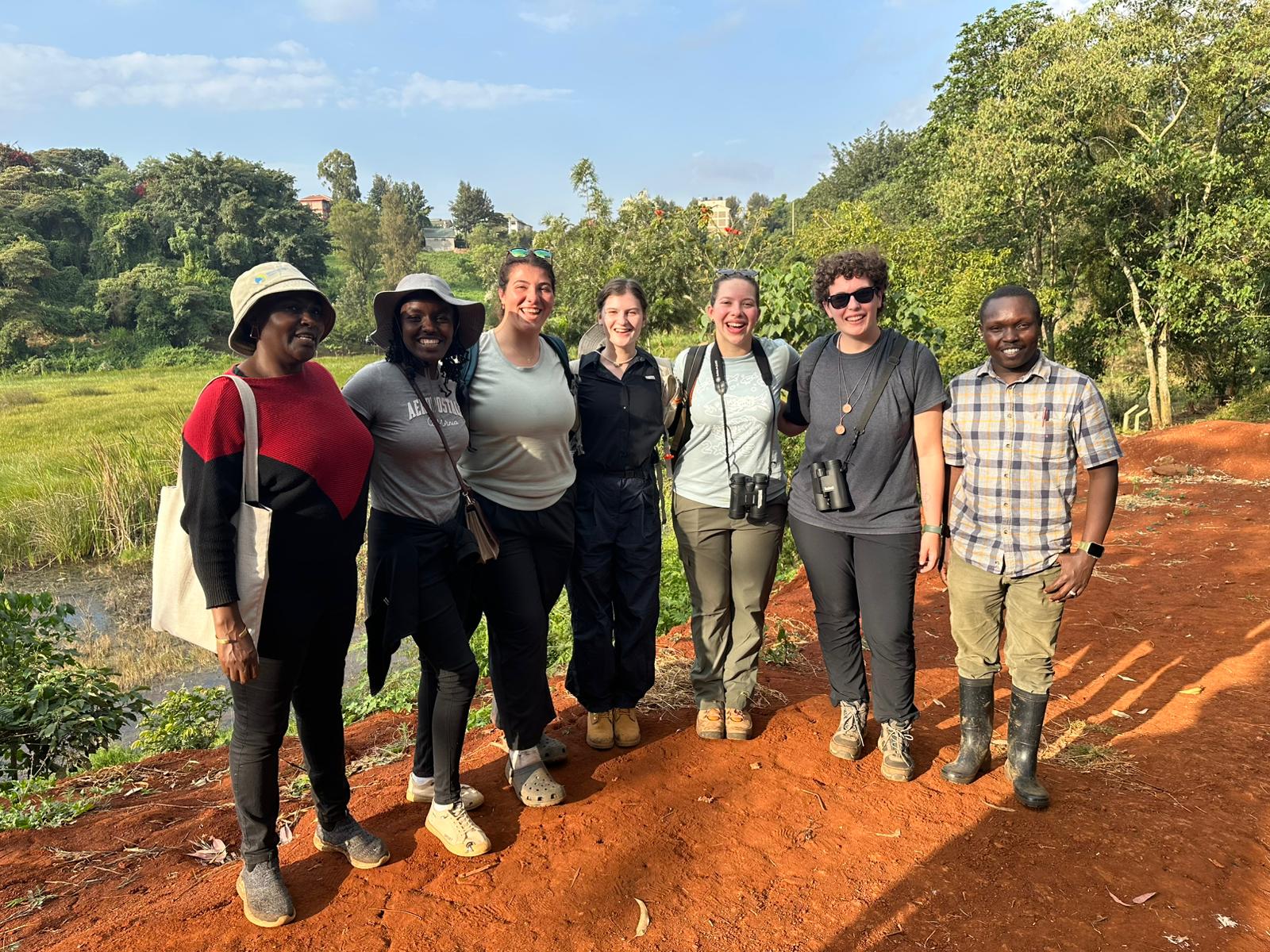
In 2025, the Cross-Border Eco-Education Project achieved a proud and historic milestone: the arrival of our first international student cohort, welcomed from the University of Texas, United States. This group of exceptional researchers and students brought a wide spectrum of ecological research interests to Kenya's landscapes, from wildlife behaviour and conservation genetics to freshwater ecology and biodiversity.
Their visit marked not merely the beginning of a project, but the birth of a lasting partnership, a proof of concept that Africa, and Kenya in particular, is ready and able to host world-class ecological education at the highest level.
Kenya is the gateway, but our vision does not end at its borders. The Cross-Border Eco-Education Project is actively developing partnerships with institutions and conservation areas across Africa, with the ambition of building a continent-wide network of ecological learning destinations.
Each new partner nation expands what is possible: new ecosystems, new cultures, new research frontiers, and new connections between the next generation of global environmental leaders.
To apply for a student cohort, establish a research partnership, or explore institutional collaboration, please contact ACEF through our official website.
Kenya@acef -ngo.org
6 Photos


1. Promote Experiential, Field-Based Learning Transform natural ecosystems into immersive classrooms where students gain hands-on scientific and ecological experience.
2. Advance Research and Scientific Inquiry Facilitate high-quality, research-driven learning in fields such as marine science, wildlife ecology, conservation biology, and limnology.
3. Foster Global Academic and Cultural Exchange Connect international students, researchers, and local communities to promote cross-cultural learning and knowledge sharing
4. Leverage Africa’s Biodiversity as a Learning Resource Position Africa’s ecosystems as central tools for education, innovation, and environmental awareness.
5. Strengthen Institutional and Academic Partnerships Build collaborations with universities, research institutions, and conservation organizations to support accredited learning and joint research.
6. Empower Youth and Emerging Environmental Leaders Equip young people with practical skills, global exposure, and leadership capacity in environmental conservation and sustainability.
7. Enhance Community Engagement and Indigenous Knowledge Integration Incorporate local knowledge systems and community participation into scientific learning and conservation practice.
8. Position Africa as a Global Hub for Eco-Education Establish Kenya as a leading destination for international ecological education and research.
9. Scale a Pan-African Eco-Education Network Expand the program across Africa to create a continent-wide platform for ecological learning and collaboration.
10. Support Conservation Through Education Use education as a tool to drive long-term conservation outcomes and sustainable ecosystem management.